We Were Here Tomorrow Roles: Tools and Teamwork Guide
Learn how We Were Here Tomorrow roles work, compare the cube and hook tools, and coordinate puzzle clues with your partner for a smoother co-op adventure.
Jump to
How Do We Were Here Tomorrow Roles Work?
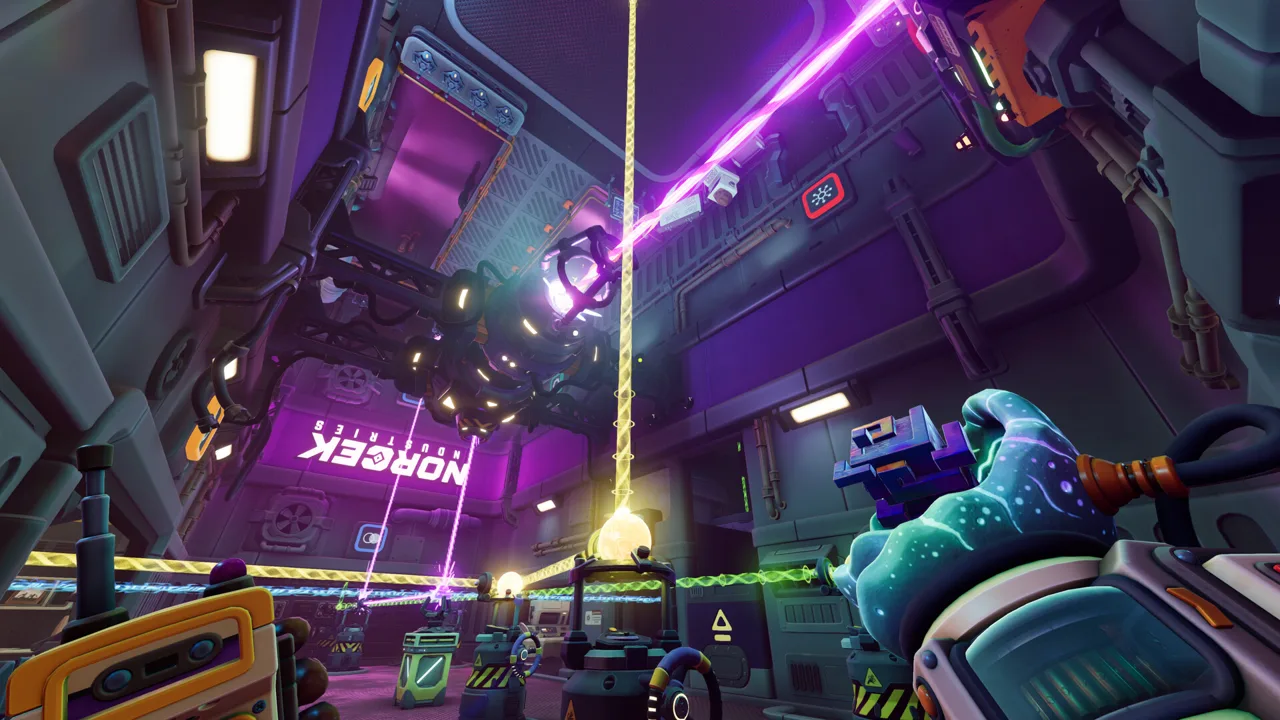
Your partner can be standing beside the answer while you’re staring at the controls that make it work. We Were Here Tomorrow roles give each Explorer different information and equipment, making clear communication essential to getting through Norček Industries. Understanding We Were Here Tomorrow roles helps you connect those separate perspectives and decide what to describe, what to operate, and when to act together.
Both players take the part of Antarctic Explorers who awaken inside a strange research facility. Director Kathleen Bowe needs help completing the work of her missing team, sending you into puzzles built around unusual technology, separation, and cooperation.
Each Explorer has a distinct role and a personal high-tech tool. The practical difference is what each player can see and do: your partner’s surroundings, available controls, and equipment can supply something your side needs.
| Part of the role system | What it means during play |
|---|---|
| Two Explorers | You and your partner play Antarctic Explorers |
| Different perspectives | You and your partner experience the facility differently |
| Individual equipment | Each Explorer carries a personal high-tech tool |
| Frequent separation | Walkie-talkie communication connects your discoveries |
| Shared objectives | Progress depends on combining information and actions |
Treat every new room as a conversation starter. Describe the controls you can reach, the information you can read, and any obstacles blocking your route. Ask your partner for the same inventory before experimenting.
Keep both players involved in interpreting clues. The Explorer holding the relevant tool still needs information from the other side, and the person reading instructions needs feedback about what those instructions actually change.
Cube and Hook Tools: What Each Explorer Can Do
We Were Here Tomorrow roles involve different equipment and perspectives. During the early adventure, you gain access to a cube-producing tool and a hook tool that pulls.
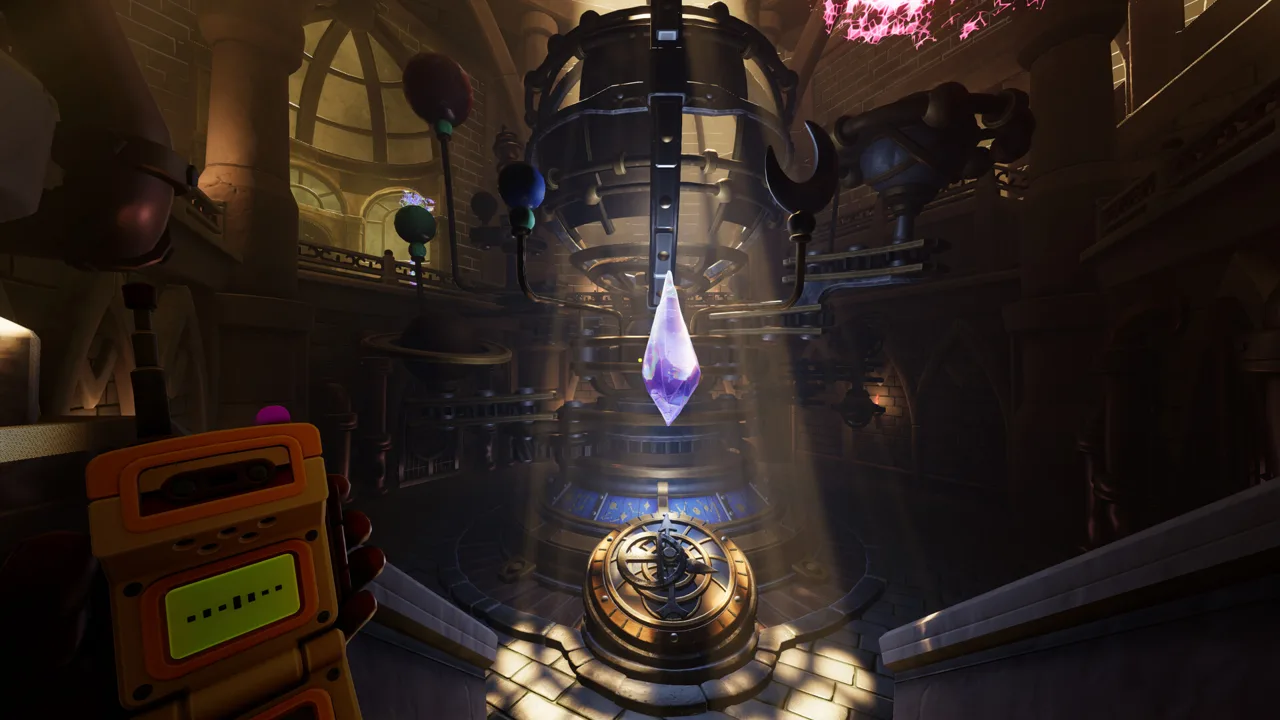 Image: Steam / Total Mayhem Games
These are useful descriptions of their functions. Use them as simple callouts when discussing a puzzle: “cube tool” and “hook tool” tell your partner which action you mean.
The cube tool can place cubes, including on suitable wall surfaces. Cubes also provide something to climb onto. The hook tool supplies a pulling action, with its early equipment section introducing targets and handles that require attention to position and aim.
| Tool | Actions introduced early | Coordination tip |
|---|---|---|
| Cube tool | Produces cubes and places them on suitable surfaces | Tell your partner where you intend to place a cube |
| Hook tool | Pulls with a hook | Identify the intended target before using it |
| Walkie-talkies | Carry communication between separated Explorers | Report the result after your partner acts |
Using the Cube Tool
Start by identifying the obstacle. If your partner needs elevation, look for a position where a cube could help them climb. If the puzzle includes a suitable wall surface, discuss that surface before placing anything.
Give placements a clear purpose. Say, “I’m putting a cube beside the raised ledge so you can try reaching it.” Your partner can then report whether the placement actually helps.
Keep your partner’s view in mind, too. A cube placed directly in front of them can obstruct their screen. Announce placements around their position so both of you can keep reading the room.
Using the Hook Tool
Look above eye level as well as straight ahead. The early tool exercises include a moment where aiming higher matters.
Describe the target before pulling: its shape, location, and relationship to the surrounding machinery. “The handle above the opening” gives your partner something concrete to inspect.
Compare the result with your cube-wielding partner’s view. One Explorer can be focused on aiming while the other notices a change elsewhere. With We Were Here Tomorrow roles, that exchange is part of operating the equipment effectively.
What the Early Puzzles Teach You About Roles
The opening assignments introduce several ways the game divides responsibility. Sometimes the task separates reading clues from entering an answer. Elsewhere, one Explorer moves through a space while their partner operates machinery around it.
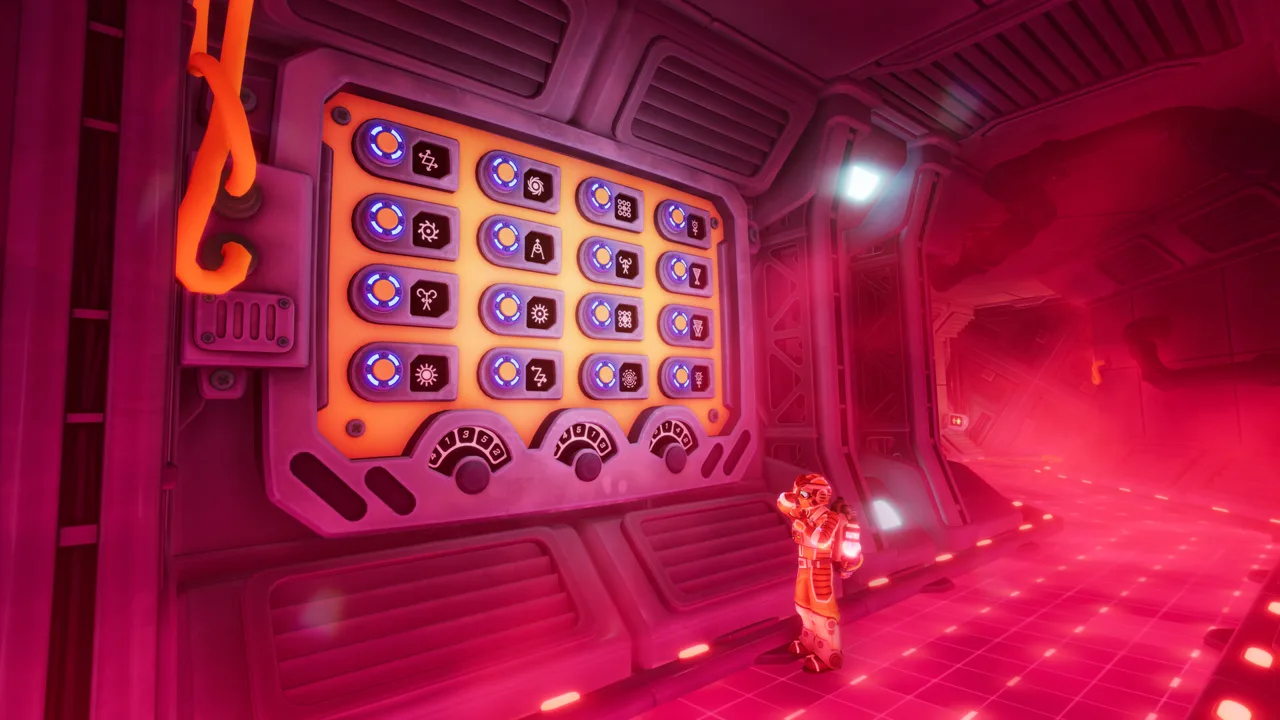 Image: Steam / Total Mayhem Games
Watch how responsibility changes between tasks. Avoid carrying the same assumptions into every room.
Symbols Need Shared Descriptions
An early symbol puzzle separates visual information from button inputs. That creates an immediate communication problem: you need names for unfamiliar images.
Describe visible features before choosing a nickname. Mention the outline, repeated shapes, or distinctive details. Once both of you recognize the same image, shorten its name for the rest of that puzzle.
If two symbols resemble each other, explain the difference explicitly. A vague nickname can work until another symbol fits it just as well.
For example, say, “This one has two circular shapes with inward-facing tails.” Ask your partner to describe the matching image back before entering a sequence.
Controls Need Clear Identification
Another early task involves several different physical controls. The player operating them needs to distinguish among levers, a dial, and a sliding control.
Name each control by its action and location. “The large pull lever beside the dial” is easier to follow than “that switch.”
After completing a step, report what changed. That gives the instruction reader a chance to check the next part instead of continuing through a sequence based on an incorrect assumption.
Different Sizes Create Different Responsibilities
The research area includes equipment that reduces and enlarges an Explorer. A smaller player can navigate spaces while their partner handles larger machinery and helps with the surrounding route.
During this section, describe your position whenever your partner loses sight of you. Ask them to inspect the area around your route, including objects they can move or equipment they can operate.
These encounters explain why We Were Here Tomorrow roles extend beyond the tools. Your current location and access to information also shape what your partner needs from you.
Communication Habits That Make Both Roles Easier
Good communication starts with a shared frame of reference. “Left” becomes confusing when you are facing opposite directions or looking at a mechanism from different sides.
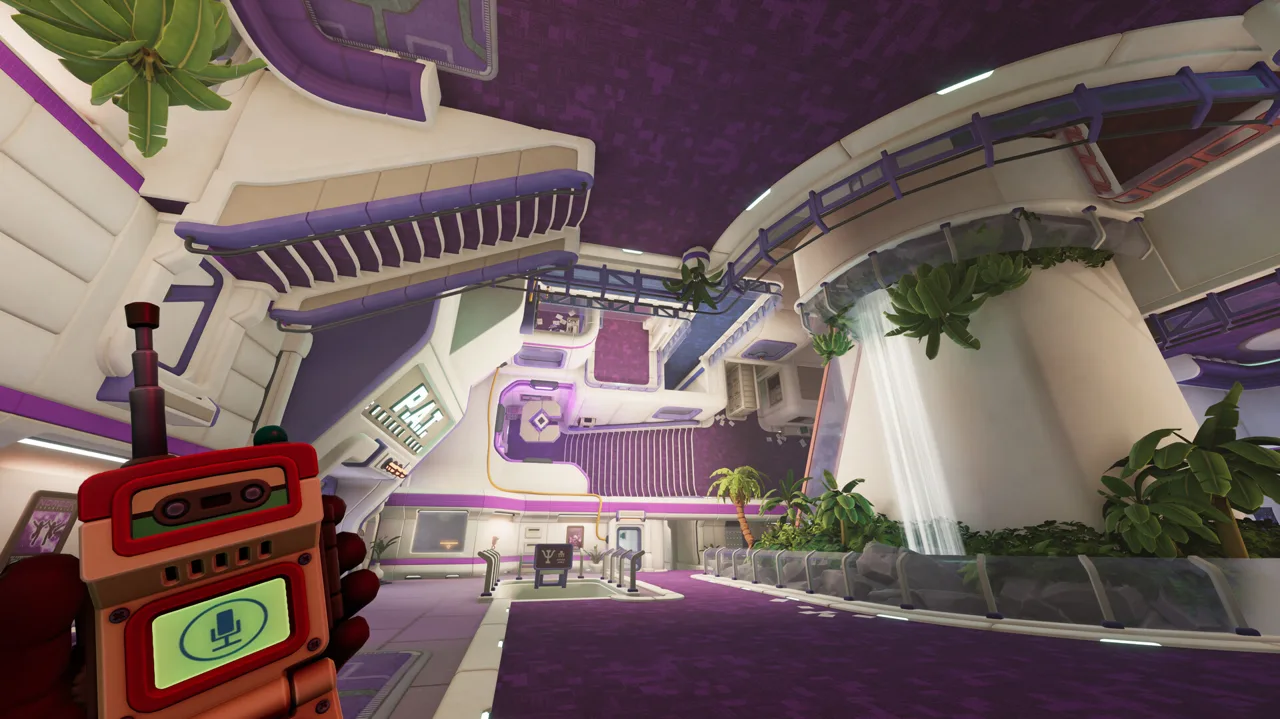 Image: Steam / Total Mayhem Games
Agree on whose viewpoint you are using before directing movement. For a panel, identify a fixed reference such as its top edge or a recognizable nearby object. Keep that reference consistent throughout the instruction.
| Communication problem | What to say or do |
|---|---|
| Opposite viewpoints | Specify whose left and right you mean |
| Similar symbols | Describe the feature that separates them |
| Several controls nearby | Name the control type and its location |
| A timed sequence | Agree on the reading order before activating it |
| An unexpected result | Describe exactly what changed on your side |
| Both players are stuck | Recheck displays, instructions, and available interactions |
Separate Discovery From Instructions
When entering a room, exchange observations before issuing commands. Tell your partner what you can see, then compare those details with their controls.
Once you understand the connection, switch to short instructions. Lengthy descriptions are useful while identifying a symbol; a timed input needs compact, agreed-upon names.
For directional sequences, establish the order in which you will read the indicators. Speak the directions consistently and include diagonals clearly when they appear.
Recheck Displays After Progress
An early control puzzle includes instructions on a computer that the players initially overlook. Revisit readable screens when you are unsure what comes next.
Ask a specific question: “Does your monitor show control pictures now?” That directs your partner toward an actionable check.
Apply the same habit to written instructions. A chemistry task combines ingredient labels, machine settings, and a written preparation sequence. Read the full sequence together before dispensing ingredients, including any ingredient that appears more than once.
Repeat Critical Details
Use a quick readback for information that is easy to confuse. Repeat a symbol sequence, ingredient name, or target location before committing to the action.
Keep feedback equally precise. Say whether a door opened, an indicator changed, or the machine rejected the input. Both We Were Here Tomorrow roles depend on understanding the outcome, especially when only one Explorer can see it.
Choosing Roles and Preparing Your Co-op Session
Choose between the We Were Here Tomorrow roles by discussing which equipment you each want to operate. If creating climbing aids appeals to you, ask to handle the cube tool. If aiming at targets and pulling mechanisms sounds appealing, ask for the hook tool.
Both players still need to observe, explain, and interpret. Share those responsibilities throughout the session, even when only one of you can perform the next physical action.
Before starting, check the practical requirements:
| Session detail | What to prepare |
|---|---|
| Player count | Two players |
| Connection | An internet connection for online co-op |
| PC voice equipment | A working PC-compatible microphone for each player |
| Finding a partner | Create a public lobby or arrange a session with a friend |
| Expected adventure length | Plan for roughly 10–15 hours, depending on your pair |
| Earlier games | You can play Tomorrow as a standalone adventure |
Test your microphones before tackling separated puzzles. Make sure both players can hear full sentences clearly, especially detailed descriptions of symbols and machinery.
Plan multiple sessions if needed. The adventure’s estimated length leaves room for exploration, discussion, and puzzles that take time to untangle. Agree on how much time you have before starting a session so neither player feels rushed through an explanation.
You can also replay from the opposite perspective to experience the other side of the puzzles. Swap perspectives on a later playthrough if you want to see the information and interactions your partner handled.
Ready to enter the facility? Visit the We Were Here Tomorrow Steam page to get the game, then settle your tool preferences and test your voice setup together.
FAQ
What are the We Were Here Tomorrow roles?
You play two Antarctic Explorers with different perspectives and individual high-tech equipment. The early adventure introduces a cube-producing tool and a hook tool used for pulling. Both players contribute information and actions to shared puzzles.
Which role should a beginner choose?
Choose the tool that interests you, then agree to explain unfamiliar interactions as you encounter them. Both roles require communication, observation, and puzzle solving. Describe what you can see and ask your partner to do the same whenever you enter a new area.
Can you play We Were Here Tomorrow alone?
The game requires two players for online co-op. Its puzzles depend on combining separate perspectives. If you need a partner, you can create a public lobby and wait for another player to join.
Can you replay from your partner’s perspective?
Yes. You can play again from the opposite perspective to experience the other side of the puzzles. Use that playthrough to explore the equipment, clues, and interactions your partner managed during your previous adventure.
Continue with
 We Were Here Tomorrow Series: Play Order & Co-Op GuideExplore the We Were Here Tomorrow series, learn the main game order, check co-op requirements, and get practical tips for tackling puzzles with a partner.
More in Guide
We Were Here Tomorrow Controls: PC and Console Guide
Learn We Were Here Tomorrow controls for PC and controllers, including radio use, Hook Gun basics, Goop Gun basics, remapping, and smoother co-op play.
We Were Here Tomorrow Walkie Talkies: Tips and Fixes
Learn how We Were Here Tomorrow walkie talkies work, share clues through co-op puzzles, and troubleshoot microphone issues and broken voice chat on PC.
We Were Here Tomorrow Achievements: Full List & Tips
Track all 37 We Were Here Tomorrow achievements with Steam unlock rates, practical co-op puzzle tips, and a focused checklist for your completion run.
We Were Here Tomorrow Cross Play: Platforms & Co-Op
We Were Here Tomorrow cross play connects PC, PS5, and Xbox Series players. Explore platform compatibility, co-op requirements, and tips for a co-op night.
Join the community
Official channels for news, updates and player help: