We Were Here Tomorrow Reviews: Puzzles, Co-Op & Bugs
We Were Here Tomorrow reviews explore co-op puzzles, sci-fi labs, technical issues, and playtime. See what to expect before teaming up for the adventure.
Jump to
Are We Were Here Tomorrow Reviews Positive?
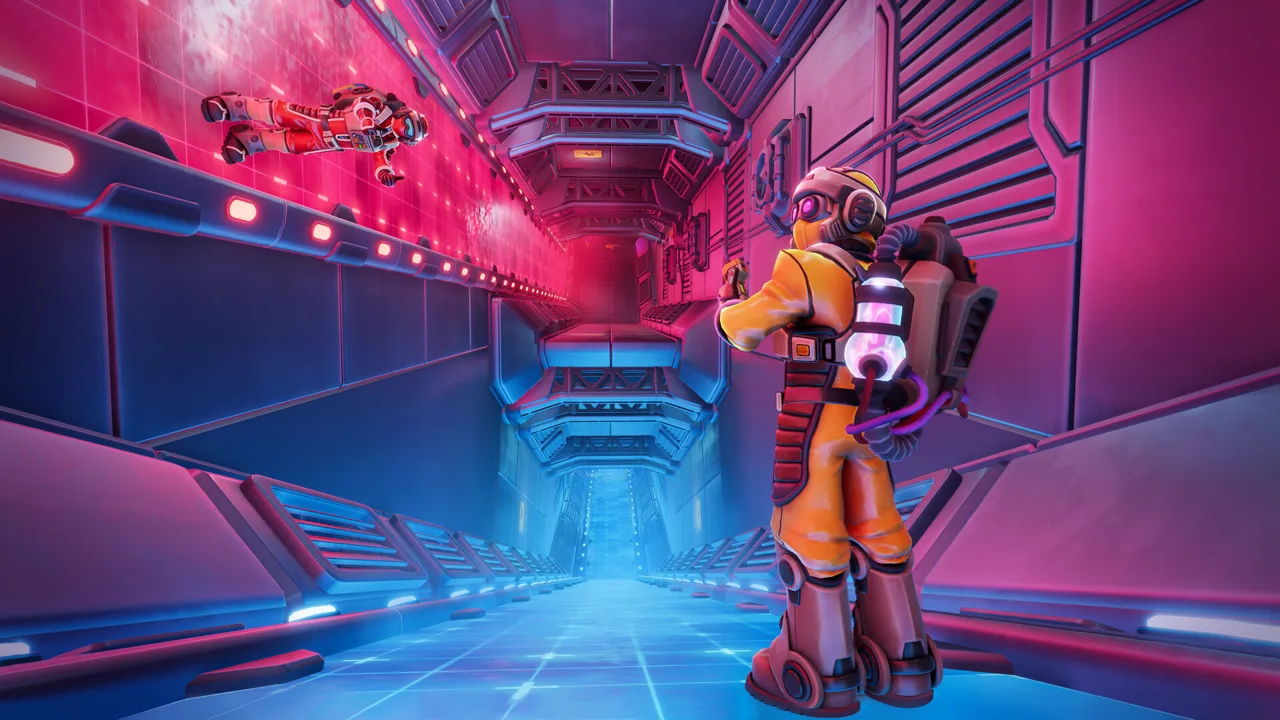
We Were Here Tomorrow reviews point to an inventive co-op adventure with enough friction to test your partnership. That matters when your next puzzle night depends on clear communication, readable clues, and keeping both players connected. The divide in We Were Here Tomorrow reviews comes down to whether its imaginative science experiments outweigh uneven difficulty and technical trouble.
Developed and published by Total Mayhem Games, Tomorrow trades much of the series’ medieval atmosphere for colorful laboratories, experimental equipment, and a retro-futuristic world. The Steam release date is October 20, 2026.
Its central appeal remains familiar: you and a partner possess different information, perspectives, and tools. Progress depends on combining those differences through conversation. Tomorrow also puts you together more often, giving the adventure a different rhythm from prolonged separation.
| Area | What works | Where friction appears |
|---|---|---|
| Setting | Colorful laboratories and elaborate science equipment | A substantial departure from the older castle atmosphere |
| Cooperation | Shared spaces alternate with separate responsibilities | Story dialogue can interrupt radio communication |
| Puzzles | Experiments use scale, gravity, electricity, and time | Some clues are subtle and difficulty spikes sharply |
| Presentation | Detailed environments and synth-heavy music | Performance and audio problems affected review-period play |
The positive verdict emphasizes variety, humor, and satisfying breakthroughs. The negative verdict centers on prolonged puzzle bottlenecks, disrupted pacing, and bugs. Neither reaction erases the other: this is an adventure whose appealing ideas can coexist with exhausting stretches.
A New Setting Changes the Feel of Cooperation
The sci-fi shift runs deeper than a new coat of paint. After becoming trapped beneath Antarctica’s ice, two Explorers awaken inside a Norček Industries facility. Director Kathleen Bowe needs help completing work left behind by a missing research team, while questions build around the company’s experiments.
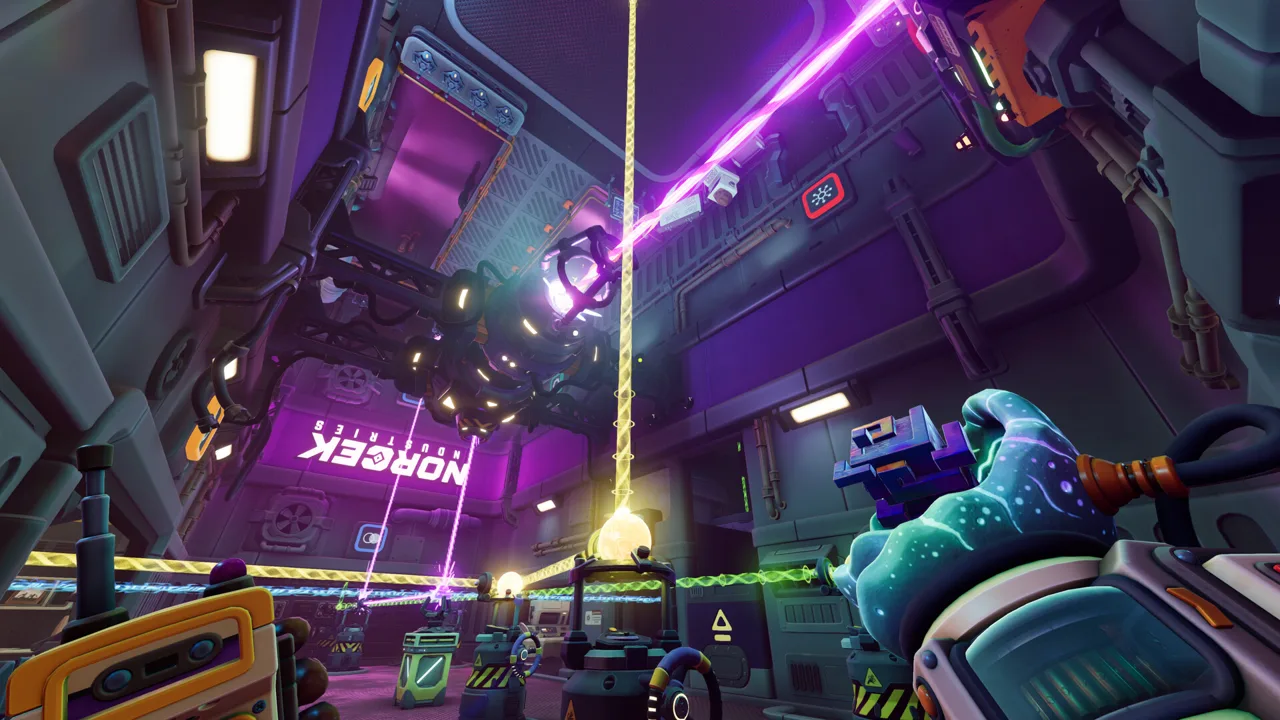 Image: Steam / Total Mayhem Games
Laboratories, offices, and communal spaces replace much of the familiar stone architecture. Bright lighting and slightly cartoonish designs give the facility a playful appearance, even when its purpose feels suspicious.
The contrast running through We Were Here Tomorrow reviews is understandable. The new environment creates room for unusual experiments, while its busier presentation and more talkative storytelling change the eerie isolation associated with earlier adventures.
You also spend more time physically alongside your partner. That creates room for shared discoveries and silly interactions with experimental tools before another puzzle divides your responsibilities.
| Co-op element | How it changes the adventure |
|---|---|
| Shared rooms | Both players can explore and examine parts of the same space |
| Separate sections | Partners must describe information the other cannot see |
| Distinct equipment | Different tools contribute to obstacles neither player can handle alone |
| Walkie-talkies | Spoken descriptions connect the two perspectives |
| More frequent dialogue | The story moves forward through direct communication as well as environmental details |
Keep descriptions specific when your perspectives differ. Describe a symbol’s shape, an object’s position, or a machine’s visible connections rather than saying “the thing over there.”
When story dialogue interrupts the radio, repeat the important detail afterward. Communication is part of the puzzle design, and an interrupted explanation can leave your partner working from incomplete information.
The game is a standalone adventure within a connected series. You do not need to complete earlier entries in order before starting Tomorrow.
Puzzle Variety Is the Main Attraction—and the Main Dispute
The strongest thread in We Were Here Tomorrow reviews is how thoroughly the puzzles use the facility’s science-fiction premise.
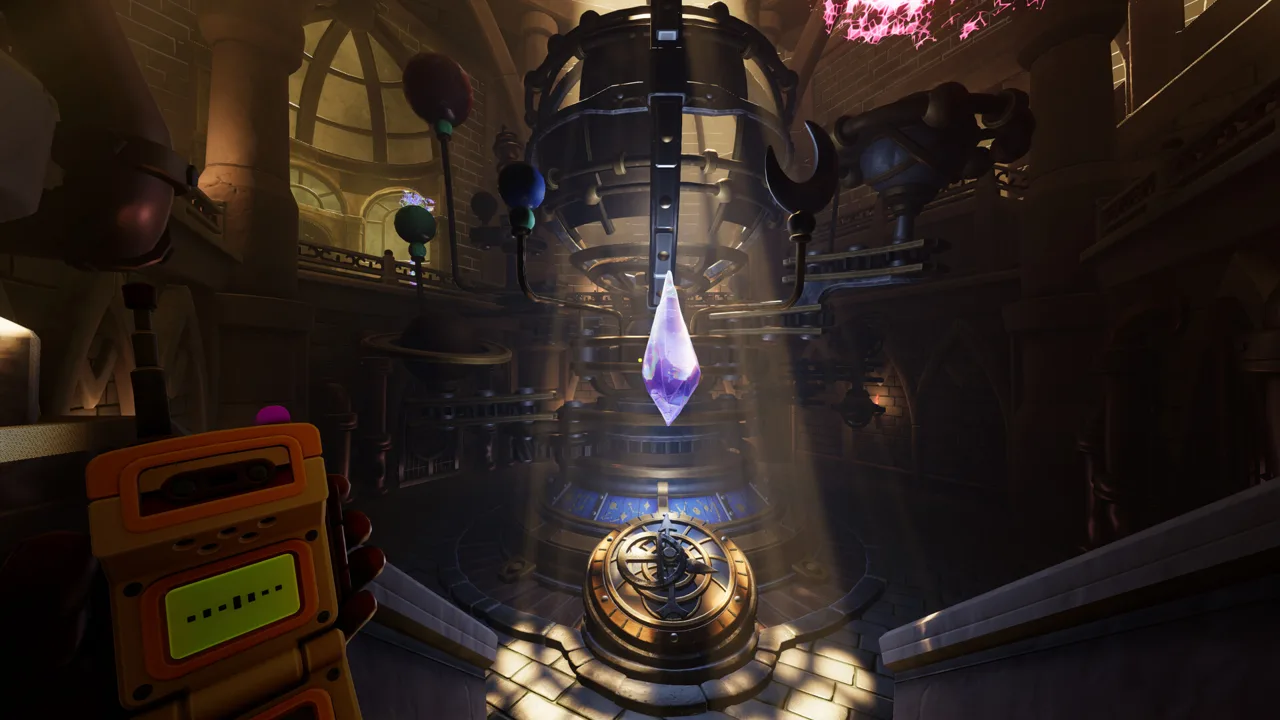 Image: Steam / Total Mayhem Games
Instead of simply moving through themed rooms, you encounter experiments that change how you understand the environment. A partner shrinks to explore spaces at a tiny scale. Other sections involve altered gravity, lasers, electrical connections, and technology passed between different times.
Shrinking also changes the sound of in-game voice chat, turning practical instructions into squeaky exchanges. That small joke helps make cooperation feel playful rather than purely procedural.
Why the Difficulty Can Feel Uneven
Complexity alone does not explain the disagreement. The more divisive issue is whether the necessary information is clear enough to support the solution.
Some computer screens contain background details. Others contribute clues. Because interaction is inconsistent across screens, overlooking a relevant display can leave a puzzle feeling more obscure than it needs to be.
Whiteboards and posters also deserve attention. A detail that looks decorative can supply the connection you are missing.
The difficulty complaints become especially pronounced around the laser and generator puzzles. The harsher assessment included more than two hours spent on the laser puzzle and four hours of unsuccessful generator attempts before outside help enabled progress. Those durations describe a difficult playthrough, rather than a fixed expectation for every pair.
Before repeating the same failed experiment, check whether both players understand the same rules.
- Inspect nearby screens, whiteboards, and posters for relevant information.
- Explain what your equipment changes and what remains unchanged.
- Separate visible facts from your current theory about the solution.
- Compare both perspectives before deciding that an object has no purpose.
These habits follow directly from the game’s asymmetrical structure. Your partner may already possess the missing information without recognizing its relevance.
The payoff is the familiar shared breakthrough: separate observations suddenly connect, and a confusing machine becomes understandable. The risk is spending too long searching for the detail that makes that breakthrough possible.
Technical Problems and Gravity Sections Deserve Attention
Technical criticism in We Were Here Tomorrow reviews needs to stay tied to platform and timing. Pre-release PC performance trouble and PS5 audio failures describe different problems.
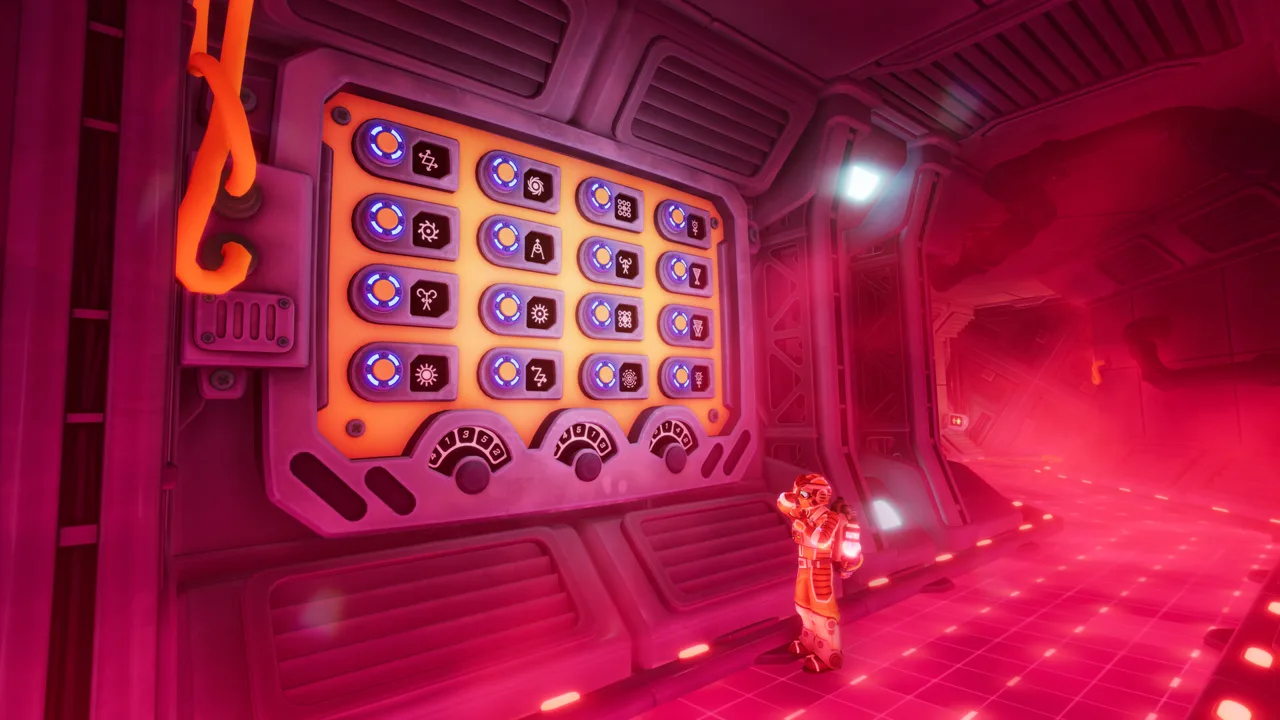 Image: Steam / Total Mayhem Games
On PC, detailed rooms struggled to maintain 60 FPS at a high graphics preset during pre-release play. Without the hardware configuration behind that result, it cannot serve as a performance forecast for your own system.
PS5 problems included failed in-game voice chat, intermittent or missing sound, session interruptions, and collision trouble. Getting stuck in scenery sometimes forced a return to the main menu and resulted in lost progress.
| Platform or feature | Review-period problem | Practical effect |
|---|---|---|
| PC, high graphics preset | Frame-rate drops in more complex rooms | Uneven smoothness during exploration |
| PS5 voice chat | In-game communication failed | Communication required an external alternative |
| PS5 audio | Music, effects, and dialogue cut out or remained silent | Story delivery and atmosphere suffered |
| PS5 sessions | Unexpected returns to the main menu | Cooperative play was interrupted |
| PS5 collision | Characters became caught around scenery | Some restarts caused lost progress |
These issues matter especially in a game built around conversation. Missing dialogue can weaken the story, while broken voice communication interferes with the central mechanic.
Gravity manipulation introduces a separate consideration. Walking along walls and ceilings produces striking spaces, but repeated perspective changes caused motion sickness during play, including for someone who did not normally experience it in games.
Take a break if the gravity sections make you feel disoriented. Their visual novelty does not make discomfort easier to ignore.
For the PC version, compare your hardware with the requirements before committing to a session:
| Component | Minimum | Recommended |
|---|---|---|
| Operating system | Windows 11, 64-bit | Windows 11, 64-bit |
| Processor | AMD Ryzen 5 3600 or equivalent | AMD Ryzen 5 5600X or equivalent |
| Memory | 8 GB RAM | 16 GB RAM |
| Graphics | Nvidia GTX 1660Ti, 6 GB, or equivalent | Nvidia GeForce RTX 3060 or equivalent |
| DirectX | Version 12 | Version 12 |
| Storage | 25 GB available | 25 GB available |
Both players also need an internet connection and a working PC-compatible microphone for PC play.
Playtime, Pacing, and What to Expect Before Starting
We Were Here Tomorrow reviews suggest a substantial puzzle adventure, but completion time depends heavily on how quickly your partnership works through its bottlenecks.
One playthrough had passed eight hours with a meaningful portion remaining. Another put the story estimate at around 12 hours and full completion at around 20 hours. Treat those as planning estimates, especially because repeated failures and technical interruptions can lengthen a session considerably.
The pacing concern is more specific than simple length. Several puzzles can flow together naturally before an unclear task or complicated route interrupts that momentum. A session that begins with steady progress can end with both players focused on a single unresolved obstacle.
Plan around your shared attention span rather than a target number of completed rooms. The game asks you to listen, remember details, explain unfamiliar objects, and revise theories together. Those demands become harder when either partner is tired.
Before starting:
- Agree on consistent descriptions for recurring symbols and equipment.
- Check that you can hear each other clearly.
- Leave time to examine environmental clues instead of rushing between machines.
- Pause when frustration starts replacing useful conversation.
For story expectations, Tomorrow offers more direct narrative guidance alongside environmental details. That can make the adventure feel more immediate, although missing audio seriously undermined the PS5 story experience.
Taken together, We Were Here Tomorrow reviews describe a creative expansion of the series with noticeable rough edges. Its experiments provide a strong reason to explore the facility together; obscure clues and technical interruptions explain why the same adventure can become frustrating.
Visit the We Were Here Tomorrow Steam page to check the PC purchase options and requirements before arranging your next co-op session.
FAQ
What do We Were Here Tomorrow reviews agree on?
The two critical assessments both praise the colorful sci-fi setting, unusual environments, and increased time spent alongside your partner. They differ much more sharply on puzzle fairness, pacing, and how heavily technical problems affect the overall experience.
How long does We Were Here Tomorrow take to beat?
A story estimate is around 12 hours, with approximately 20 hours for full completion. Another playthrough remained unfinished after eight hours. Puzzle-solving speed, repeated attempts, and technical interruptions all influence the actual duration.
Can you play We Were Here Tomorrow alone?
No. It is a co-op-only adventure built for two players with different perspectives and responsibilities. On PC, both players need an internet connection and a working PC-compatible microphone.
Do you need to play the earlier We Were Here games?
No. The series has connected stories, but each game is designed as a standalone online co-op adventure. You can begin with Tomorrow without completing the previous entries.
Continue with
 We Were Here Tomorrow Preorder: Launch Buying GuideWe Were Here Tomorrow preorder searches now lead to launch purchases. Check the release date, price, co-op requirements, and PC specs before you buy it.
More in Release
We Were Here Tomorrow Price: Launch Deals and Costs
See the We Were Here Tomorrow price, launch discount, PS5 subscription requirements, and bundle cost before you and your co-op partner buy the game today.
We Were Here Tomorrow Release Date: Launch Details
We Were Here Tomorrow release date was October 20, 2026. Check launch pricing, crossplay, PC requirements, and co-op essentials before playing together.
Join the community
Official channels for news, updates and player help: